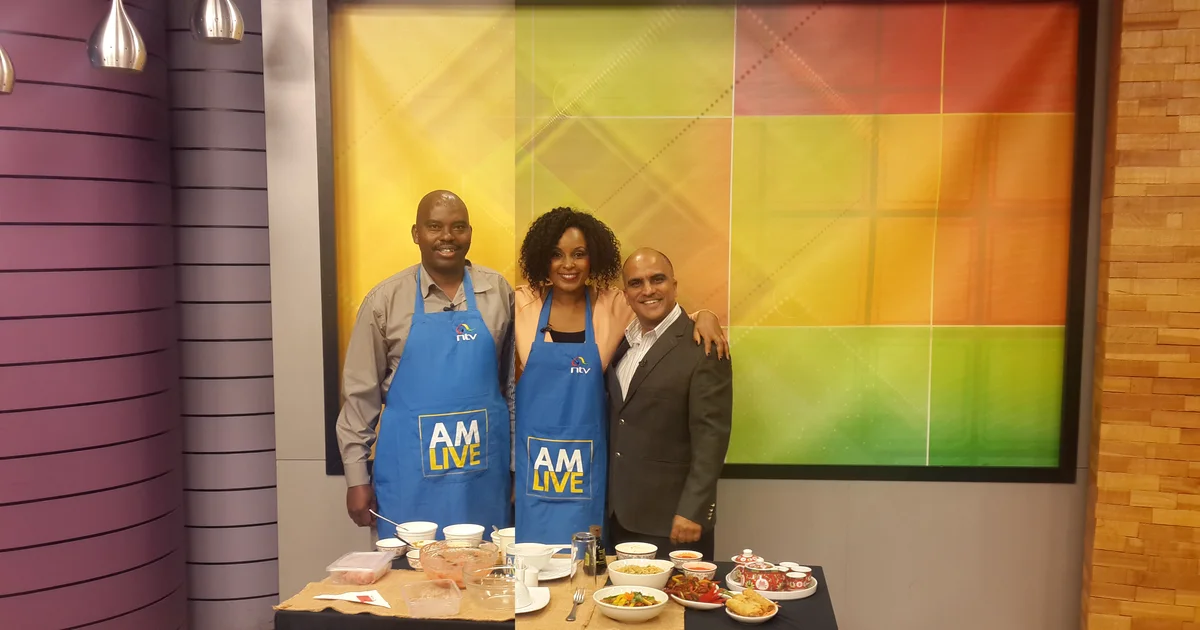
Valentine's Day 2004. A spring roll crosses a pass in Parklands, Nairobi. The first one. Mister Wok is open. Ten years later, the same story is being told on national television — and the wok is still on fire.
AM Live, NTV Kenya's morning show, invited Karim and Chef Francis Makau to the studio for a 25-minute segment that was equal parts cooking demonstration and brand origin story. The brief was simple: show Kenya how Chinese food is made. What came through was something more — a founding philosophy about food, culture, and what it means to build something entirely your own.
A Kenyan Kitchen
The detail that anchored the studio interview was one Karim stated plainly: Mister Wok has no Chinese ownership, no Chinese staff, and no imported approach. Every dish on the menu is made by a Kenyan team, with local produce, calibrated to what Nairobi actually eats. The menu is not a translation of Chinese cuisine — it is an interpretation of it, shaped by the tastes of the people it feeds.
The childhood memory Karim returned to was the Chinese restaurant as a Kenyan celebration destination — where families went for birthdays, for anniversaries, for the end of something hard and the beginning of something good. Mister Wok was built to carry that feeling, at a price point that did not require a special occasion to justify it.
What Was Cooked
Chef Francis opened with a Kung Pao chicken stir-fry — wok on high heat, oil shimmering, shredded chicken moving fast through garlic, ginger, and stock. The technique was the point: the cornstarch slurry that tightens the sauce, the vegetables added last to stay crisp, the Chinese wine vinegar that lifts the whole dish. Bullet sauce for those who want the fire.
The second demonstration brought Sheila Mwanyiga to the prep station. Chinese chicken wings — marinated in garlic, ginger, black pepper, egg, wheat flour, and cornstarch — were mixed into a thick batter that the host worked with her own hands. Francis explained what the cornstarch does: it seals the coating so the wing fries clean, no grease, all crunch. The same marinade, he said, works for fish, prawns, calamari. One technique, many dishes.
The segment closed with Karim walking through the table of sauces — white onion, sweet and sour, bullet, soy — and the ritual of Chinese tea: jasmine or green, poured throughout the meal, good for the appetite, better for the conversation.
The Record
The full segment is archived on YouTube. The timestamp at 7:29 catches the moment Karim explains, without ceremony, what Mister Wok actually is. Worth watching once if you want to understand why this restaurant has been in business for over two decades.