It starts with the breed, not the recipe
Most sheep in East Africa are bred for survival first — hardy, lean, built for dry, difficult country. Good animals, wrong job if what you want is meat. Dorper is different. It's a South African breed developed specifically to carry weight as muscle, not bone — and over the last two decades it's become the sheep of choice for serious commercial farmers across Kajiado, Narok, and Nakuru. Locally, you'll often hear it called "Dopa" — the Kenyan pronunciation that's stuck in kitchens and butcheries long before it made it onto a menu.
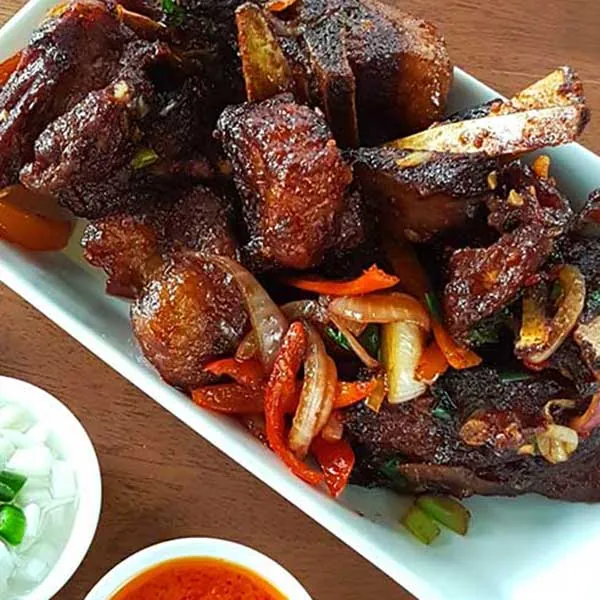
The difference shows up on the plate before it shows up in the description. A Dorper rib isn't a thin strip of meat wrapped around bone for structure. It's a thick, dense cut where the bone is almost an afterthought — you're not working to find the meat, you're working to finish it.
Then it's about where the animal grew up
The other word you'll sometimes hear alongside our lamb dishes is Molo — a highland town in Nakuru County, cold and wet in a way most of Kenya isn't. That climate matters more than it sounds like it should. Sheep raised in cold, damp highland pasture develop a distinct fat layer to stay warm, and that fat doesn't just sit on the outside — it marbles into the muscle itself. The result is a texture that's noticeably more tender and a flavor that's cleaner, rounder, without the sharp, aggressive edge that gives dry-country mutton its reputation.
Breed gets you the ratio. Origin gets you the marbling. Put them together and you get a rib that's hard to reproduce with ordinary sheep, no matter how good the sauce is.
What actually happens to it in our kitchen
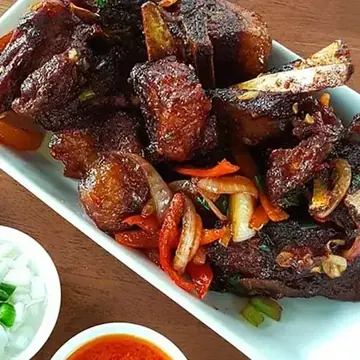
The ribs go through a three-stage preparation to hit fall-tender texture without losing structure — not something you can rush, and not something that works on a thin cut. Then they meet our live wok burners at 300°C, the same live-fire technique behind everything that leaves our kitchen: a fast, high-heat sear that catches and locks in flavor rather than slow-cooking it out. Finished with a sticky-sweet sauce built to complement the lamb, not cover for it.
No pork touches our kitchens, at any branch, ever — that's a brand-wide standard, not a special order.
At Capital Centre, our halal-assured flagship, the Lamb Ribs are prepared exactly this way with zero exception — full halal-assured sourcing, front to back, for guests who need that certainty without asking twice. Order from the Capital Centre menu.
Why this matters more than a menu description
A lot of "premium" claims on restaurant menus are marketing shorthand for nothing in particular. This one isn't. Dorper genetics and Molo highland pasture are two separate, verifiable reasons a rib can taste the way ours does — one about the animal, one about where it grew up. We didn't invent a story to sell a dish. We found a dish worth explaining properly.
Next time you're deciding between starters, that's the whole pitch: heavy bone structure is what you don't get, and everything else on the plate is what you do.
Mister Wok Lamb Ribs — KES 1,400. Available at Parklands, Capital Centre (halal-assured), and Two Rivers.