Every chef who has worked at Mister Wok knows that sound. They learned it here, in a Kenyan kitchen, over a Kenyan flame. That is where this story begins.
The Hands Behind the Heat
Mister Wok is a Kenyan brand. This still surprises people, which is itself a kind of compliment — the food reads as too precise, too calibrated, too authentically Chinese to have been built in Nairobi. But it was. The techniques came from Sichuan and Guangdong. The hands that carry them are local. The knowledge transferred slowly, over years of repetition, until the distinction between origin and ownership dissolved entirely.
The wok demands a specific kind of intelligence. It is not recipe intelligence — it is body intelligence. You learn when to lift the pan, when to let it rest, how to read the colour change in garlic before it crosses from golden to burnt. The margin is three seconds. Sometimes two. A decade of cooking at 300°C teaches a kitchen not just how to make a dish but how to feel it — in the grip, in the rhythm, in the particular fragrance that rises when ginger meets a clean, screaming-hot surface. That fragrance does not come from a recipe. It comes from ten thousand repetitions by hands that paid attention.
What Stayed. What Refined.
The spring rolls have not changed. Neither have the chicken wings, the Hot and Sour Soup, or the Dry Chilli Chicken that has been on the menu since the first week. These are not the dishes of a kitchen that could not think of anything new. They are the dishes of a kitchen that found something correct and refused to move it.
A decade of serving a dish teaches you where its weaknesses are. A kitchen with any pride closes those gaps quietly, without announcement.
What changed was everything underneath. The rice is now an aged long-grain aromatic variety — an aged grain that behaves differently at high heat, each grain separating cleanly, holding its texture long after it leaves the wok. The broths are slower. The sourcing is tighter. The spring rolls are still hand-rolled daily. Four per plate. The price of a thing made with this much attention should reflect the attention. It does.
The Table Nairobi Built
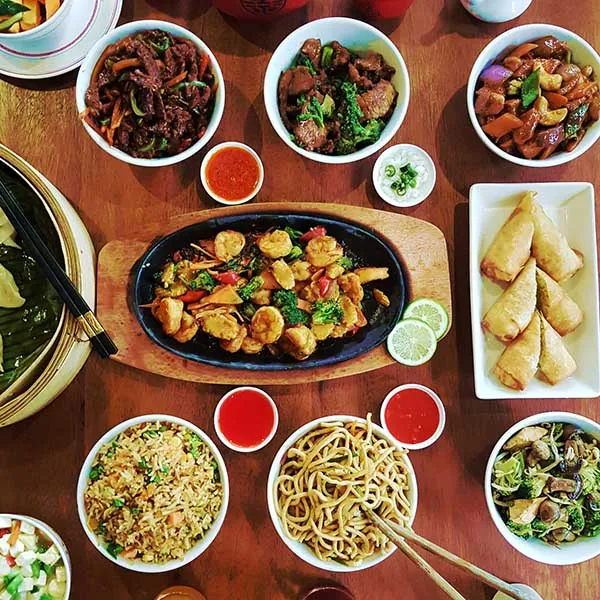
In 2014, Nairobi largely ate alone. You ordered your plate. I ordered mine. The shared table — dishes at the centre, everyone reaching, conversation built around what to try next — was not the city's default dining language. Mister Wok did not run a campaign to change this. It simply placed the food in the middle and waited.
The Lamb Ribs are too good to eat alone. The Dim Sum comes four to a portion for a reason. The Tom Yum arrives and the table leans in instinctively. The Yong Chow Rice — shrimp, egg, chicken, wok-tossed until each component holds its own and the whole is greater than its parts — was designed for six hands, not two.
Ten years later, the same guests who arrived cautiously in 2014, ordering individually, unsure of the menu, now walk through the door with their children and order for the table without being asked. They have memorised which dishes their table will fight over. They know to order the spring rolls first and the soup alongside. They have developed, without realising it, a fluency. That fluency is what a permanent restaurant does — it teaches the city a language, and the city keeps speaking it.
The Conversation Continues
Mister Wok is not interested in your nostalgia. Nostalgia looks backward. We are interested in the next table — the one with the first-timer who does not yet know that the Dry Chilli Chicken will become their standing order, the child who is about to eat their first dumpling, the couple splitting the Prawn Sizzler on a Tuesday evening in Gigiri because that is simply what Tuesday evenings in Gigiri look like now.
The flame is still on. The wok is still at 300°C. The table is set. You know where to find us.